
Churning Options For Betterment
Churning Options For Betterment

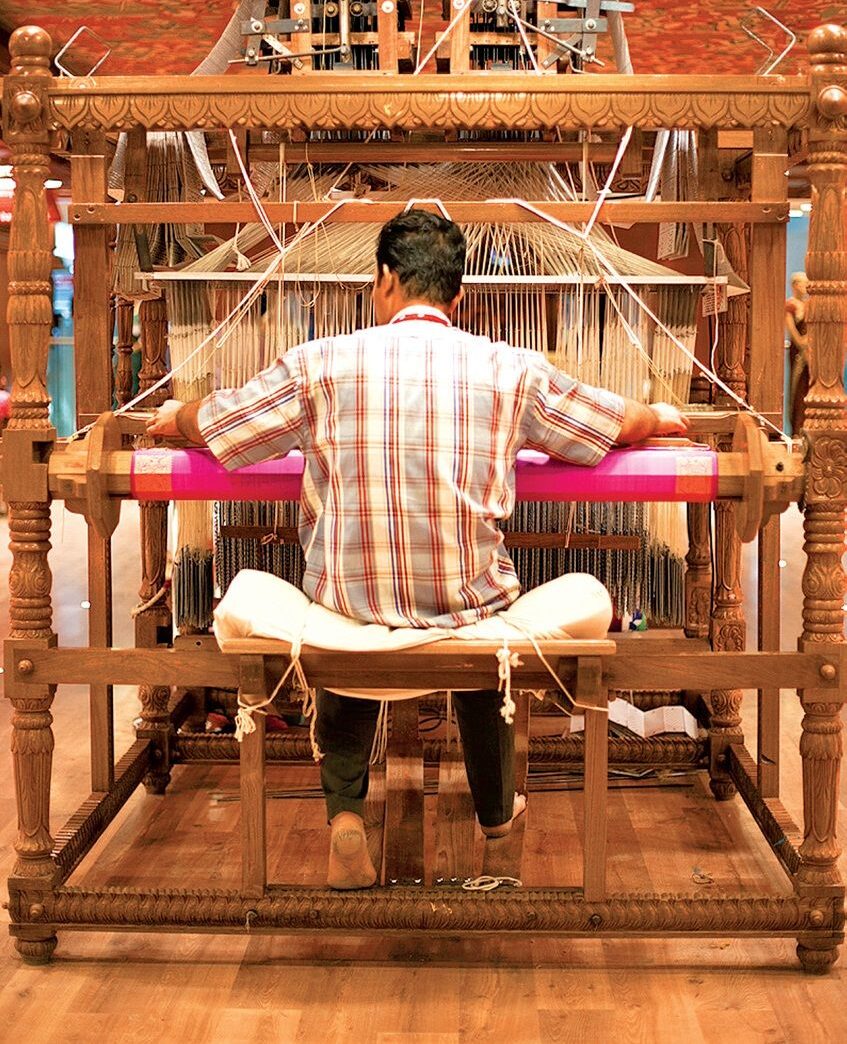
We often bring something handmade home after travelling.
A scarf. A basket. A ceramic bowl. An embroidered textile.
We remember where we bought it but often know very little about who made it.
How long did it take?
What materials were used?
Was the technique learned from a parent or grandparent?
What does the craft mean to the community?
What happens when the object is sold?
These questions can change the way we look at handmade work.
When we see an embroidered textile, we see colour, pattern and technique.
The artisan may see years of learning.
They may see a design taught by a family member.
They may see a particular community identity.
They may see hours of careful work.
Understanding this context doesn’t make the object more valuable because it is “old” or “traditional.”
It makes us appreciate the human work behind it.
Across India, craft knowledge has often travelled through families and communities.
Techniques are taught by watching, practising and repeating.
Some knowledge exists in books.
Much of it does not.
It lives in people’s hands.
This is why meeting artisans matters.
A conversation can reveal things that a museum label or product description cannot.
Our craft journeys are designed to create space for these conversations.
We may visit a workshop, sit with an artisan, learn a process, share a meal or simply listen.
The experience doesn’t need to be dramatic.
In fact, some of the most meaningful moments can be very ordinary.
A conversation over tea.
A child learning from a parent.
A maker explaining why a particular colour is used.
A visitor struggling with a technique that the artisan performs effortlessly.
These moments help us understand craft as a living practice.
There is an important distinction.
We want people to meet artisans, but we don’t want communities to become tourist attractions.
That means respecting privacy.
Asking before taking photographs.
Being mindful of people’s time.
Paying fairly for workshops and knowledge.
Buying without aggressive bargaining.
And remembering that we are visitors.
We believe the best craft experiences are based on mutual respect.
The traveller comes with curiosity.
The artisan comes with knowledge.
Both leave having exchanged something.
Perhaps the most meaningful thing you can take home from a craft journey isn’t an object.
It is a new understanding.
The next time you see a handwoven textile, you might notice the structure of the weave.
When you see embroidery, you might recognise the hours behind it.
When you hold a handmade object, you might think about the hands that shaped it.
That is what we hope craft journeys can do.
Make us look a little closer.