Churning Options For Betterment
Churning Options For Betterment

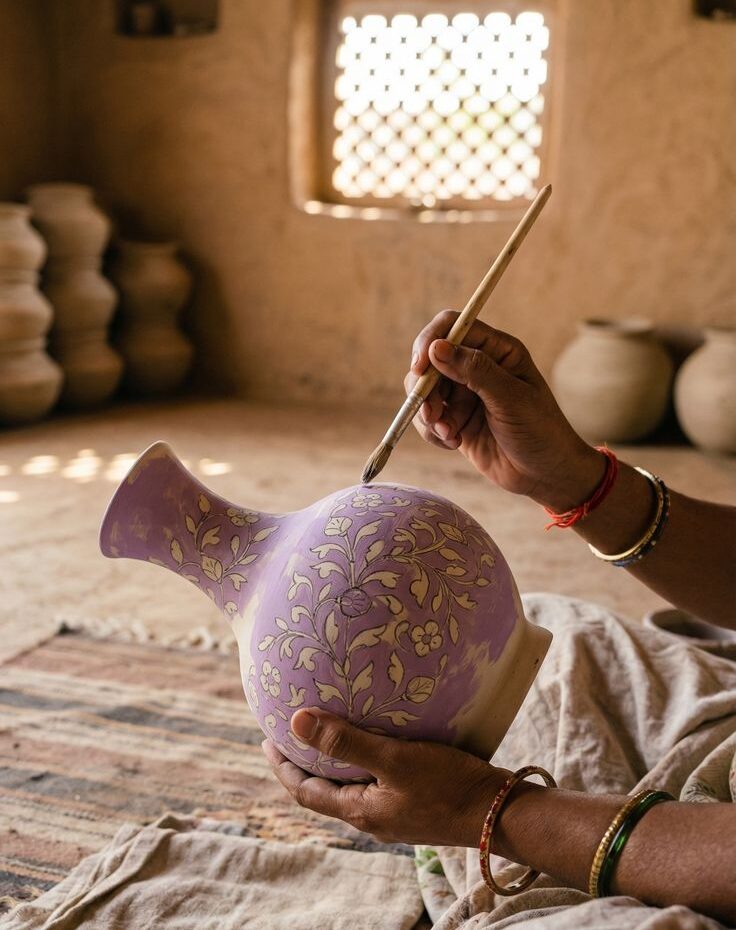
India’s craft landscape is as diverse as its geography.
Different climates, materials, histories and communities have shaped different ways of making.
A journey through Indian crafts is therefore also a journey through India itself.
From block printing and tie-dye to pottery, leatherwork, embroidery and miniature painting, Rajasthan has a rich and varied craft landscape.
Here, colour, pattern and craftsmanship are deeply connected to local traditions.
Gujarat is home to extraordinary textile traditions, including embroidery, weaving, resist dyeing and printing.
The craft landscape of Kutch alone brings together several distinct communities and techniques.
Kashmir’s craft traditions reflect the region’s history, landscape and material culture.
Embroidery, papier-mâché, carpet weaving and woodwork are among the practices that continue to shape its cultural identity.
Odisha’s traditions include painted storytelling, textile weaving, appliqué, stone carving and many other forms of handmade practice.
Craft here often exists closely alongside religious and cultural traditions.
From Channapatna’s wooden toys to handloom traditions and woodcraft, Karnataka offers a fascinating combination of craft, material and design.
Bastar is known for its distinctive metalwork, woodcraft and other handmade traditions deeply connected to local communities and ways of life.
The Northeast offers a remarkable diversity of weaving, beadwork, basketry and other craft practices.
Many of these traditions are closely connected to community identity and everyday life.
India’s craft map is far larger than any single list can capture.
Every region has its own materials.
Every community has its own knowledge.
Every craft has its own story.
Our aim is to slowly build a network of journeys and stories that allows people to experience this diversity in a meaningful way.
We don’t want to simply create a catalogue of crafts.
We want to create opportunities to meet the people behind them.
To understand their practices.
To learn.
To exchange.
And to create new relationships that can continue beyond a single journey.